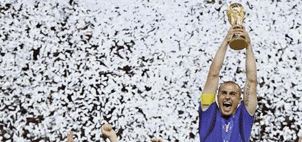
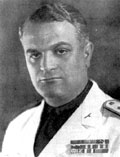
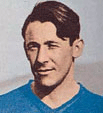
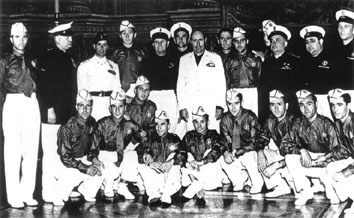
The first part of all the honours won by the Italian National Team throughout the years.
History:
TEAM HONOURS 1
The Italian National Team is among the very few National Teams who won all the major competitions and trophies, both World and European that football can offer. The only exception is the new competition organised by FIFA among the winners of the various continental cups and the World Cup, the FIFA Confederations Cup. But one must point out that the Azzurri only participated twice in this competition with the best result being Third position. The first page of team honours concentrates on the Azzurri victories in the World Cup, the European Football Championships, the Confederation Cup and the Olympic Football Tournament.
WORLD CUP
THE MOST PRESTIGIOUS NATIONAL TEAM HONOUR IN THE WORLD
Winners -Regarded as World Champions.
Organisers - FIFA (Federation Internationale de Football Association).
Participating Countries - All FIFA member countries in the World,
more than 200 nations divided in six different groups per continent.
Competition Structure - The competition is organised in two main
rounds, the Qualification round and the Final round. The
Qualifications are played by all FIFA member nations sub-divided
per continent. Each Confederation organises the qualifications of its continent with matches played on home and away basis. Different numbers of nations qualify for the Final round from each continent. The Final round is played in one country or a group of neighboring countries and is organised by FIFA and the hosting country / countries. Only the countries that had qualified from the Qualification round, together with the current World Champions and hosts will play in the Final round. But the number of finalists increased during the years, from 13 in 1930 to 32 in 1998.
First Edition - 1930
Editions Played until Today - 21
Calendar - Final round organised every four years and takes approximately a month, generally between June and July. The Qualification round starts two years prior to the Final round.
THE TROPHY
Name -
Jules Rimet Cup, named after the French FIFA President Jules Rimet who originated the idea of the competition.
Sculptor - Abel Lafleur (French)
Material - Gold plated Sterling Silver with Lapis Lazuli base.
Height - 35 cm
Weight - 3.8 Kg
Represents - Winged Goddess of Victory holding an eight-sided chalice
Used - 9 Editions, from 1930 until 1970
Winners - The winner of each edition kept the trophy for four years until the next edition. The nation who won three editions kept the trophy forever.
History - The trophy was won by five nations: Brazil (1958, 1962, 1970), Italy (1934, 1938), Uruguay (1930, 1950), West Germany (1954) and England (1966).
Holders - Brazil won the Trophy forever in 1970. Unfortunately it was stolen in 1983 and apparently melted down.
THE TROPHY
Name -
FIFA World Cup, named after the Federation who originated and organises the competition.
Sculptor - Silvio Cazzaniga (Italian)
Material - 18 carat Solid Gold with Malachite base.
Height - 36.8 cm
Weight - 6.2 Kg
Represents - Two athletes with their arms spread towards the sky, holding the globe.
Used - 12 Editions, from 1974 until 2018
Winners - The winner of each edition keeps the trophy for four years until the next edition. No nation will ever take the trophy forever, no matter how many times he wins it
History - Until today, the trophy was won by six nations: Argentina (1978, 1986), West Germany / Germany (1974, 1990, 2014), Italy (1982, 2006), Brazil (1994, 2002), France (1998, 2018) and Spain (2010)
WINNERS (1st Place) - WORLD CHAMPIONS
1934
Competition hosted by Italy between 27 May and 10 June 1934. Final held in Rome at the Stadio Nazionale del P.N.F. between Italy and Czechoslovakia won by the Azzurri 2-1 after extra time. The score at the end of normal time was 1-1.
The Squad
Giorgio
VACCARO
President FIGC
Vittorio
POZZO
National Coach
Giampiero COMBI
Juventus
Captain
(4 games)
Luigi ALLEMANDI
Inter
Luigi BERTOLINI
Juventus
Mario CASTELLAZZI
Inter
Felice P. BOREL
Juventus
Attilio DEMARIA
Inter
Giovanni FERRARI
Juventus
Attilio FERRARIS
Roma
Enrique GUAITA
Roma
Anfilogino GUARISI
Lazio
Luisito MONTI
Juventus
Giuseppe MEAZZA
Inter
Eraldo MONZEGLIO
Bologna
Raimondo ORSI
Juventus
Mario PIZZIOLO
Fiorentina
Virginio ROSETTA
Juventus
Captain
(1 game)
Angelo SCHIAVIO
Bologna
Guido MASETTI
Roma
Umberto CALIGARIS
Juventus
Mario VARGLIEN
Juventus
1938
Competition hosted by France between 4 June and 19 June 1938. Final held in Paris at the Stade de Colombes between Italy and Hungary won by the Azzurri 4-2.
The Squad
Giorgio
VACCARO
President FIGC
Vittorio
POZZO National Coach
Alfredo FONI
Juventus
Michele ANDREOLO
Bologna
Sergio BERTONI
Pisa
Gino COLAUSSI
Triestina
Amedeo BIAVATI
Bologna
Mario GENTA
Genoa
Giovanni FERRARI
Inter
Pietro FERRARIS
Inter
Ugo LOCATELLI
Inter
Aldo OLIVIERI
Lucchese
Renato OLMI
Inter
Giuseppe MEAZZA
Inter
Captain
Eraldo MONZEGLIO
Roma
Pietro PASINATI
Triestina
Mario PERAZZOLO
Genoa
Silvio PIOLA
Lazio
Pietro RAVA
Juventus
Guido MASETTI
Roma
Carlo CERESOLI
Bologna
Pietro SERANTONI
Roma
1982
Competition hosted by Spain between 13 June and 11 July 1982. Final held in Madrid at the Stadio Santiago Bernabeu between Italy and West Germany won by the Azzurri 3-1.
The Squad
Federico SORDILLO
President FIGC
Enzo
BEARZOT National Coach
Fulvio COLLOVATI
Milan
Alessandro ALTOBELLI
Inter
Giancarlo
ANTOGNONI
Fiorentina
Ivano BORDON
Inter
Franco BARESI
Milan
Bruno CONTI
Roma
Antonio CABRINI
Juventus
Franco CAUSIO
Udinese
Giovanni GALLI
Fiorentina
Daniele MASSARO
Fiorentina
Giampiero MARINI
Inter
Dino ZOFF
Juventus
Captain
Francesco GRAZIANI
Fiorentina
Gabriele ORIALI
Inter
Paolo ROSSI
Juventus
Gaetano SCIREA
Juventus
Franco SELVAGGI
Cagliari
Claudio GENTILE
Juventus
Giuseppe BERGOMI
Inter
Marco TARDELLI
Juventus
Giuseppe DOSSENA
Torino
Pietro VIERCHOWOD
Fiorentina
2006
Competition hosted by Germany between 9 June and 9 July 2006. Final held in Berlin at the Olympia Stadion between Italy and France won by the Azzurri 5-3 on penalty shoot-out after the game finished 1-1.
The Squad
Guido
ROSSI
Commissioner FIGC
Marcello
LIPPI
National Coach
Gennaro I. GATTUSO
Milan
Marco AMELIA
Livorno
Simone BARONE
Palermo
Mauro G. CAMORANESI
Juventus
Andrea BARZAGLI
Palermo
Alberto GILARDINO
Milan
Daniele DE ROSSI
Roma
Alessandro DEL PIERO
Juventus
Fabio GROSSO
Palermo
Filippo
INZAGHI
Milan
Marco MATERAZZI
Inter
Fabio CANNAVARO
Juventus
Captain
Vincenzo IAQUINTA
Udinese
Alessandro NESTA
Milan
Massimo ODDO
Lazio
Simone PERROTTA
Roma
Gianluigi BUFFON
Juventus
Angelo PERUZZI
Lazio
Andrea PIRLO
Milan
Luca TONI
Fiorentina
Cristian ZACCARDO
Palermo
Gianluca ZAMBROTTA
Juventus
Francesco TOTTI
Roma
RUNNER-UP (2nd Place) - VICE WORLD CHAMPIONS
1970
Competition hosted by Mexico between 31 May and 21 June 1970. Final held in Mexico City at the Azteca Stadium between Italy and Brazil won by the Brazilians 4-1.
The Squad
Artemio
FRANCHI
President FIGC
Ferruccio VALCAREGGI National Coach
Enrico ALBERTOSI
Cagliari
Mario BERTINI
Inter
Pierluigi CERA
Cagliari
Roberto BONINSEGNA
Inter
Giuseppe FURINO
Juventus
Giancarlo DE SISTI
Fiorentina
Angelo DOMENGHINI
Cagliari
Sergio GORI
Cagliari
Alessandro MAZZOLA
Inter
Comunardo NICCOLAI
Cagliari
Giacinto FACCHETTI
Inter
Captain
Antonio JULIANO
Napoli
Fabrizio POLETTI
Torino
Pierino PRATI
Milan
Giorgio PUIA
Torino
Tarcisio BURGNICH
Inter
Luigi RIVA
Cagliari
Gianni RIVERA
Milan
Roberto ROSATO
Milan
Lido VIERI
Inter
Dino ZOFF
Napoli
Ugo FERRANTE
Fiorentina
1994
Competition hosted by the United States of America between 17 June and 17 July 1994. Final held in Los Angeles at the Rose Bowl
Stadium between Italy and Brazil won
by the Brazilians 3-2 on penalty shoot-
out after the game finished 0-0.
The Squad
Antonio MATARRESE
President FIGC
Arrigo
SACCHI National Coach
Demetrio ALBERTINI
Milan
Roberto BAGGIO
Juventus
Luigi APOLLONI
Parma
Pier Luigi CASIRAGHI
Lazio
Antonio BENARRIVO
Parma
Nicola BERTI
Inter
Antonio CONTE
Juventus
Alberico EVANI
Sampdoria
Roberto DONADONI
Milan
Paolo MALDINI
Milan
Captain
(4 games)
Alessandro COSTACURTA
Milan
Luca MARCHEGIANI
Lazio
Daniele MASSARO
Milan
Dino BAGGIO
Juventus
Lorenzo MINOTTI
Parma
Roberto MUSSI
Torino
Giuseppe SIGNORI
Lazio
Mauro TASSOTTI
Milan
Gianfranco ZOLA
Parma
Luca BUCCI
Parma
Franco BARESI
Milan
Captain
(3 games)
Gianluca PAGLIUCA
Sampdoria
WORLD CUP 3rd PLACE
1990
Competition hosted by Italy between 8 June and 8 July 1990. 3/4 Place Final held in Bari at the Stadio San Nicola on the 7 July 1990 between Italy and England won by the Azzurri 2-1.
The Squad
Antonio MATARRESE
President FIGC
Carlo ANCELOTTI
Milan
Roberto BAGGIO
Fiorentina
Andrea A. CARNEVALE
Napoli
Franco BARESI
Milan
Ciro FERRARA
Napoli
Luigi
DE AGOSTINI
Juventus
Fernando DE NAPOLI
Napoli
Ricardo FERRI
Inter
Paolo MALDINI
Milan
Roberto MANCINI
Sampdoria
Giuseppe BERGOMI
Inter
Captain
Giuseppe GIANNINI
Roma
Giancarlo MAROCCHI
Juventus
Gianluca PAGLIUCA
Sampdoria
Salvatore SCHILLACI
Juventus
Nicola BERTI
Inter
Aldo SERENA
Inter
Gianluca VIALLI
Sampdoria
Pietro VIERCHOWOD
Sampdoria
Walter ZENGA
Inter
Roberto DONADONI
Milan
Stefano TACCONI
Juventus
WORLD CUP 4th PLACE
1978
Competition hosted by Argentina between 1 June and 25 June 1978. 3/4 Place Final held in Buenos Aires at the River Plate Stadium on the 24 June 1978 between Italy and Brazil won by the Brazilians 2-1.
The Squad
Artemio FRANCHI
President FIGC
Enzo
BEARZOT National Coach
Giancarlo ANTOGNONI
Fiorentina
Mauro BELLUGI
Bologna
Roberto BETTEGA
Juventus
Paolo CONTI
Roma
Antonio CABRINI
Juventus
Ivano BORDON
Inter
Claudio GENTILE
Juventus
Aldo MALDERA
Milan
Lionello MANFREDONIA
Lazio
Dino ZOFF
Juventus
Captain
Francesco GRAZIANI
Torino
Eraldo PECCI
Torino
Paolino PULICI
Torino
Paolo ROSSI
Vicenza
Romeo BENETTI
Juventus
Claudio SALA
Torino
Gaetano SCIREA
Juventus
Marco TARDELLI
Juventus
Renato ZACCARELLI
Torino
Franco CAUSIO
Juventus
Patrizio SALA
Torino
Antonello CUCCUREDDU
Juventus
UEFA EUROPEAN FOOTBALL CHAMPIONSHIP
THE MOST PRESTIGIOUS NATIONAL TEAM HONOUR IN EUROPE
Winners -Regarded as European Champions.
Organisers - UEFA (Union of European Football Associations).
Participating Countries - All European countries that are UEFA
members, more than 50 different nations.
Competition Structure - The competition is organised in two
main rounds, the Qualification round and the Final round. The
Qualifications are played by all UEFA member nations sub-
divided in groups with matches played on home and away basis. The Final round is played in one country or a group of neighboring countries and is organised by UEFA and the hosting country / countries. Only the countries that had qualified from the Qualification round and the hosts will play in the Final round. But the number of finalists increased during the years, from 4 in 1960 to 16 in 1996 and 24 in 2016. For the first two editions (1960, 1964) it was called the 'European Nations Cup' but changed to the current name in 1968.
First Edition - 1960
Editions Played until Today - 15
Calendar - Final round organised every four years and takes approximately three weeks, generally between June and July. The Qualification round starts two years prior to the Final round.
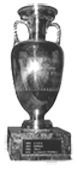
THE TROPHY
Name -
Henry Delaunay Cup, named after the French UEFA General Secretary who originated the idea of the competition.
Manufacturers - Chobillon Goldsmiths (French)
Material - Sterling Silver, with green marble base.
Height - 42 cm
Weight - 6 Kg
Used - 12 Editions, from 1960 until 2004.
Winners - The winner of each edition kept the trophy for four years until the next edition. No nation ever took the trophy forever, no matter how many times he won it.
History - The trophy was won by nine nations: Germany (1972, 1980 both as West Germany, 1996), France (1984, 2000), Soviet Union (1960), Spain (1964), Italy (1968), Czechoslovakia (1976), Netherlands (1988), Denmark (1992) and Greece (2004).
Holders - The trophy remaind the property of UEFA when it was changed with a new one in January 2006.
WINNERS (1st Place) - EUROPEAN CHAMPIONS
1968
Competition hosted by Italy between 5 June and 10 June 1968. Final held in Rome at the Stadio Olimpico between Italy and Yugoslavia. The first match finished 1-1 but the Azzurri won 2-0 the replay.
The Squad
Artemio FRANCHI
President FIGC
Ferruccio VALCAREGGI
National Coach
Giacinto FACCHETTI
Inter
Captain
Giancarlo BERCELLINO
Juventus
Tarcisio BURGNICH
Inter
Angelo DOMENGHINI
Inter
Ernesto CASTANO
Juventus
Giorgio FERRINI
Torino
Aristide GUARNERI
Bologna
Antonio JULIANO
Napoli
Giovanni LODETTI
Milan
Alessandro MAZZOLA
Inter
Gianni RIVERA
Milan
Luigi RIVA
Cagliari
Roberto ROSATO
Milan
Sandro SALVADORE
Juventus
Pietro ANASTASI
Varese
Dino ZOFF
Napoli
Pierino PRATI
Milan
Giancarlo DE SISTI
Fiorentina
THE TROPHY
Name - Henry Delaunay Cup, named after the French UEFA General Secretary who originated the idea of the competition.
Manufacturers - Asprey London Silversmiths (English)
Material - Sterling Silver.
Height - 60 cm
Weight - 8 Kg
Used - 3 editions, 2008, 2012 & 2016.
Winners - The winner of each edition keeps the trophy for four years until the next edition. No nation will ever take the trophy forever, no matter how many times he wins it.
History - The trophy was won by two nation: Spain (2008, 2012) & Portugal (2016).
RUNNER-UP (2nd Place) - VICE EUROPEAN CHAMPIONS
2000
Competition hosted by Belgium and the Netherlands between 10 June and 2 July 2000. Final held in Rotterdam at the Feyenoord Stadium between Italy and France won by the French 2-1 by the Golden Goal scored in the Extra Time after the game finished 1-1.
The Squad
Luciano
NIZZOLA
President FIGC
Dino
ZOFF
National Coach
Christian ABBIATI
Milan
Demetrio ALBERTINI
Milan
Antonio CONTE
Juventus
Massimo AMBROSINI
Milan
Angelo
DI LIVIO
Fiorentina
Alessandro DEL PIERO
Juventus
Marco DELVECCHIO
Roma
Ciro FERRARA
Juventus
Filippo INZAGHI
Juventus
Mark IULIANO
Juventus
Paolo MALDINI
Milan
Captain
Stefano FIORE
Udinese
Vincenzo MONTELLA
Roma
Paolo NEGRO
Lazio
Alessandro NESTA
Lazio
Fabio CANNAVARO
Parma
Gianluca PESSOTTO
Juventus
Francesco TOLDO
Fiorentina
Francesco TOTTI
Roma
Gianluca ZAMBROTTA
Juventus
Luigi
DI BIAGIO
Inter
(Both never played in Azzurro)
Aldo DONATI
Roma
Francesco ANTONIOLI
Roma
(never played in Azzurro)
1980
Competition hosted by Italy between 11 June and 22 June 1980. 3/4 Place Final held in Napoli at the Stadio San Paolo on the 21 June 1980 between Italy and Czechoslovakia won by the Czechs 9-8 on penalty shoot-out after the game finished 1-1.
The Squad
Enzo
BEARZOT
National Coach
Giancarlo ANTOGNONI
Fiorentina
Mauro BELLUGI
Napoli
Roberto BETTEGA
Juventus
Franco BARESI
Milan
Antonio CABRINI
Juventus
Ivano BORDON
Inter
Claudio GENTILE
Juventus
Aldo MALDERA
Milan
Dino ZOFF
Juventus
Captain
Francesco GRAZIANI
Torino
Fulvio COLLOVATI
Milan
Giovanni GALLI
Fiorentina
Ruben BURIANI
Milan
Romeo BENETTI
Roma
Gabriele ORIALI
Inter
Gaetano SCIREA
Juventus
Marco TARDELLI
Juventus
Renato ZACCARELLI
Torino
Franco CAUSIO
Juventus
Roberto PRUZZO
Roma
EURO CHAMPIONSHIP 4th PLACE
Enrico ALBERTOSI
Fiorentina
Angelo
ANQUILLETTI
Milan
Alessandro ALTOBELLI
Inter
Giuseppe BARESI
Inter
Artemio FRANCHI
President FIGC
Giuseppe CAVANNA
Napoli
(Both never played in Azzurro)
1988
Competition hosted by West Germany between 10 June and 25 June 1988. Italy lost the Semi-Final held in Stuttgart at the Neckarstadion on the 22 June 1988 against the U.S.S.R. 0-2 but the 3/4 Place Final was not held. Since the other Semi Final finished with the score of 2-1, Italy placed overall fourth on goal difference.
The Squad
Antonio
MATARRESE
President FIGC
Azeglio
VICINI
National Coach
Carlo ANCELOTTI
Milan
Alessandro ALTOBELLI
Inter
Luca
FUSI
Sampdoria
Franco BARESI
Milan
Ciro FERRARA
Napoli
Luigi
DE AGOSTINI
Juventus
Fernando DE NAPOLI
Napoli
Ricardo FERRI
Inter
Paolo MALDINI
Milan
Roberto MANCINI
Sampdoria
Giuseppe BERGOMI
Inter
Captain
Giuseppe GIANNINI
Roma
Ruggiero RIZZITELLI
Cesena
Giovanni FRANCINI
Napoli
Gianluca VIALLI
Sampdoria
Walter ZENGA
Inter
Roberto DONADONI
Milan
Stefano TACCONI
Juventus
Roberto CRAVERO
Torino
(Both never played in Azzurro)
Francesco ROMANO
Napoli
Azeglio
VICINI
National Coach
OLYMPICS FOOTBALL TOURNAMENT
THE MOST PRESTIGIOUS NATIONAL TEAM HONOUR IN THE WORLD PRIOR TO THE WORLD CUP
Winners -Regarded as best amateur national team in the world prior to 1950.
Organisers - IOC (International Olympic Committee) with the help
of FIFA (Federation Internationale de Football Association).
Participating Countries - All IOC member countries in the world
who are members of FIFA, more than 200 nations divided in six
different groups per continent.
Competition Structure - The competition is organised in two main
rounds, the Qualification round and the Final round. The
Qualifications are played by all FIFA member nations sub-divided
per continent and some are integrated with continental competitions organised by the different Confederations. Different numbers of nations qualify for the Final round from each continent. The Final round is played as part of the Summer Olympic Games although matches are not only played in the same city but throughout the whole country. Only the countries that had qualified from the Qualification round, together with the host country will play in the Final round. But the number of finalists increased during the years, from 8 in 1908 to 16 in 1920.
First Edition - 1908
Editions Played until Today - 24
Calendar - Final round organised every four years and takes approximately a month, generally between June and July. The Qualification round starts two years prior to the Final round.
Note on Amateurs - In accordance with the Olympic spirit, all participating players were meant to be amateurs. This was not a problem until the 1930's when professionalism started spreading around the world with the first editions of the Football World Cup. This lead to various different interpretations of the word amateur, resulting in each country fielding its own national team composed of players defined amateurs according to its own definition of the word. As a result of this the Soviet Bloc countries of Eastern Europe dominated Olympic football, since in these countries the top football players were state sponsored while retaining their status as amateurs. In fact, between the 1948 and the 1980 editions, 23 out of 27 Olympic medals were won by Eastern European countries. From the Olympic edition of 1936, Italy started fielding only amateur players who had never played with the Italian National Team prior to the Olympic tournament, although these games were still regarded as full national games. This continued until the 1956 edition when all the Italian football matches played in the Olympic football tournaments stopped to be regarded as full national games and all Italian selections started to be composed of various youth or amateur players. In the 1984 edition IOC decided to reform Olympic football rules in order to make it more interesting but without competing with the Football World Cup organised by FIFA. Therefore professional players started to be selected but European and South American countries had to field players that never played in a World Cup edition. This was again changed from the 1992 edition when it was decided that all Olympic football players must be less than 23 years of age with the exception of three over-23 per squad.
THE MEDALS
WINNERS (1st Place - Gold Medalists) - OLYMPIC CHAMPIONS
1936
Olympics hosted by Germany in Berlin between 1 and 16 August 1936. The Football Tournament was held in 4 different stadiums all in Berlin. Final held in the Olympia Stadion between Italy and Austria won by the Azzurri 2-1 after extra time. The score at the end of normal time was 1-1.
The Squad - Players who competed and received the Gold Medal
Alfredo
FONI
Juventus
Captain
(2 games)
Giuseppe
BALDO
Lazio
Sergio
BERTONI
Pisa
Francesco
GABRIOTTI
Lazio
Carlo
BIAGI
Pisa
Bruno
VENTURINI
Sampierdarenese
Ugo
LOCATELLI
Inter
Libero
MARCHINI
Lucchese
Alfonso
NEGRO
Fiorentina
Achille
PICCINI
Fiorentina
Luigi
SCARABELLO
Spezia
Giulio
CAPPELLI
Viareggio
Captain
(2 games)
Annibale
FROSSI
Inter
Sandro
PUPPO
Piacenza
All never played in Azzurro
As per Olympic tradition, cups and trophies are not used but the first three winners in each sport discipline are awarded a medal - Gold for the first place, Silver for the second and Bronze for the third. The General rule is that each city that organise an edition of the Olympic games will design its' own Medals although there were medal designs that continued to be used for a number of editions. Both the 1928 and the 1936 Olympic editions used the same medal design but with different inscription.
Designer - Giuseppe Cassioli (Italian), winner of a design competition by IOC in 1921
Represents - Front (Obverse): Victory holding a palm and a winner's crown. Back (Reverse): An Olympic Champion carried in triumph by the crowd, both with an Olympic Stadium in the background
Used - The front design was used with slight modifications for 17 editions, from 1928 until 2000. The back design was used for 9 editions, from 1928 until 1968.
Winners - The winners of each medal keps the medal forever.
1936
Material - Gold
Diameter - 55 mm
Thickness - 5 mm
Weight - 81 g
Inscriptions - Front: XI. OLYMPIADE BERLIN 1936. Edge: B.H MAYER PFORZHEIM 990
Mint - B.H.Mayer, Pforzheim
Quantity - Total of 960 in Gold, Silver and Bronze.
History - Until today, the football Olympic tournament was won by 18 nations: Hungary (1952, 1964, 1968), Argentina (2004, 2008), Great Britain (1908, 1912), Uruguay (1924, 1928), U.S.S.R. (1956, 1988), Belgium (1920), Italy (1936), Sweden (1948), Yugoslavia (1960), Poland (1972), East Germany (1976), Czechoslovakia (1980), France (1984), Spain (1992), Nigeria (1996), Cameroon (2000), Mexico (2012) and Brazil (2016).
Pietro RAVA
Juventus
OLYMPICS 3rd PLACE - Bronze Medalists
1928
Olympics hosted by the Netherlands in Amsterdam between 17 May and 12 August 1928. The Football Tournament was held in 4 different stadiums in Amsterdam, Rotterdam and Arnhem. The 3/4 Place Final was held at the Olympisch Stadion of Amsterdam on the 9 June 1928 between Italy and Egypt won by the Azzurri 11-3.
The Squad
Leandro
ARPINATI
President FIGC
Augusto
RANGONE
National Coach
Adolfo
BALONCIERI
Torino
Captain
Delfo
BELLINI
Genoa
Fulvio
BERNARDINI
Inter
Giovanni
DE PRA'
Genoa
Umberto
CALIGARIS
Casale
Attilio
FERRARIS
Roma
Felice
GASPERI
Bologna
Pietro
GENOVESI
Bologna
Antonio
JANNI
Torino
Virgilio F.
LEVRATTO
Genoa
Silvio
PIETROBONI
Inter
Elvio
BANCHERO
Alessandria
Giampiero
COMBI
Juventus
Valentino
DEGANI
Inter
All never played in Azzurro
Mario
MAGNOZZI
Livorno
Alfredo
PITTO
Bologna
Enrico
RIVOLTA
Inter
Virginio
ROSETTA
Juventus
Gino
ROSSETTI
Torino
Angelo
SCHIAVIO
Bologna
Pietro
PASTORE
Milan
Giacomo
BULGARELLI
Bologna
Lido
VIERI
Torino
2004
Olympics hosted by Greece in Athens between the 13 August and the 29 August 2004. The Football Tournament was held in 6 different stadiums in Athens, Heraklio, Patras, Thessaloniki and Volos. The 3/4 Place Final was held at the Kaftanzoglio Stadium of Thessaloniki on the 27 August 2004 between Italy and Iran won by the Azzurrini 1-0.
The Squad
Note - Since the 1956 edition all Italian football matches played in the Olympic football tournaments stopped to be regarded as full Italian National games and as from the 1992 edition all Olympic football players had to be less than 23 years of age with the exception of three over-23 per squad. In fact, since 1992 all Italian Olympic matches were regarded as official Under-21 games and the Under-21 Italian National Coach lead also the Azzurrini in the Olympic football tournaments. Therefore, the Bronze Medal won by the Azzurrini in the 2004 Olympic Games of Athens, is not regarded as won by the Italian National Team but by the Under-21 Italian National Team.
The 18-men squad was lead by the Italian Under-21 National Coach, the Azzurro Claudio GENTILE. It consisted of four players who had already played with the Italian National team: Captain Andrea PIRLO (Milan), Daniele BONERA (Parma), Matteo FERRARI (Parma) and Ivan PELIZZOLI (Roma); nine players who played with the Italian National team after the 2004 Olympics: Marco AMELIA (Parma), Andrea BARZAGLI (Chievo Verona), Giorgio CHIELLINI (Livorno), Daniele DE ROSSI (Roma), Alberto GILARDINO (Parma), Giandomenico MESTO (Reggina), Emiliano MORETTI (Bologna), Angelo PALOMBO (Sampdoria) and Giampiero PINZI (Udinese); one who was called-up in Azzurro after the 2004 Olympics but never played Cesare BOVO (Lecce); and four players who never played with the Italian National Team : Simone DEL NERO (Brescia, Marco DONADEL (Parma), Andrea GASBARRONI (Palermo) and Giuseppe SCULLI (Chievo Verona). The FIGC President was Franco CARRARO.
THE BADGE
Name -
FIFA World Champions Badge.
Description - The FIFA World Cup with radiating rays
and the words 'FIFA World Champions' plus the year of the last World Cup edition.
Formats - Two formats, one with gold graphics and text on white background for dark coloured shirts and the other with white graphics and text on gold background for light coloured shirts.
Diploma - Presented by FIFA to the World Champions in a diploma format, having the FIFA World Champions Badge and the Federation badge of the current World Champions.
Winners - The winner of the World Cup wears the FIFA World Champion Badge on his shirt for the next four years until the Final of the next World Cup edition..
Used - 4 Editions, first used in September 2008 by the 2006 World Champions.
History - Until today, the badge was worn by four nation: Italy (2008/10), Spain (2010/14), Germany (2014/18) and France (2018/22).
Bruno
CHIZZO
Triestina
The Squad - Players who were registered as 'Reserves' and did not receive the Gold Medal
Corrado
TAMIETTI
Brescia
Adolfo
GIUNTOLI
Alessandria
Pietro ARCARI
Milan
Go to other
HISTORY pages:
Carlo
GIROMETTA
Piacenza
Lamberto
PETRI
Bologna
Mario
NICOLINI
Livorno
Andrea VIVIANO
Alessandria
1960
Olympics hosted by Italy in Rome between the 25 August and the 11 September 1960. The Football Tournament was held in 7 different stadiums in Rome, Firenze, Grosseto, Livorno, Pescara, L'Aquila and Napoli. The 3/4 Place Final was held at the Stadio Flaminio of Rome on the 9 September 1960 between Italy and Hungary lost by the Azzurrini 1-2.
The Squad
The 19-men squad was lead by the Italian National Coach Giuseppe Viani, helped by his Assistant the Azzurro Nereo ROCCO. It consisted of eight players who played with the Italian National team after the 1960 Olympics: Captain Giovanni TRAPATTONI (Milan), Giacomo BULGARELLI (Bologna), Tarcisio BURGNICH (Udinese), Giorgio FERRINI (Torino), Gianni RIVERA (Alessandria), Sandro SALVADORE (Milan), Mario TREBBI (Milan) and Paride TOMBURUS (Bologna); and eleven players who never played with the Italian National Team : Luciano ALFIERI (Milan), Giandomenico
BALDISSERI (Reggiana), Giancarlo CELLA (Novara), Giovanni FANELLO (Catanzaro), Armando FAVALLI (Brescia), Luciano MAGISTRELLI (Triestina), Gilberto NOLETTI (Milan), Ambrogio PELAGALLI (Milan), Orazio RANCATI (Inter), Giorgio ROSSANO (Juventus) and Ugo TOMEAZZI (Modena). The FIGC President was Umberto AGNELLI.
OLYMPICS 4th PLACE
1984
Olympics hosted by the U.S.A. in Los Angeles between the 28 July and the 12 August 1984. The Football Tournament was held in 4 different stadiums in Boston, Annapolis, Palo Alto and Pasadena. Italy replaced Czeckoslovakia who was one of the the three Warsaw Pact countries who boycotted the games. The 3/4 Place Final was held at the Rose Bowl of Pasadena on the 10 August 1984 between Italy and Yugoslavia won by the Slaves 1-2.
The Squad
The 17-men squad was lead by the Italian National Coach, the Azzurro Enzo BEARZOT. It consisted of eight players who had already played with the Italian National team: Captain Salvatore BAGNI (Inter), Franco BARESI (Milan), Sergio BATTISTINI (Milan), Pietro FANNA (Verona), Daniele MASSARO (Fiorentina), Sebastiano NELA (Roma), Antonio SABATO (Inter) and Pietro VIERCHOWOD (Sampdoria); five players who played with the Italian National team after the 1984 Olympics: Riccardo FERRI (Inter), Aldo SERENA (Inter), Franco TANCREDI (Roma), Roberto TRICELLA (Verona) and Walter ZENGA (Inter); one who was called-up in Azzurro after the 1984 Olympics but never played: Filippo GALLI (Milan); and three players who never played with the Italian National Team : Massimo BRIASCHI (Genoa), Maurizio IORIO (Verona) and Beniamino VIGNOLA (Juventus). The FIGC President was Federico SORDILLO.
1988
Olympics hosted by South Korea in Seoul between the 17 September and the 2 October 1988. The Football Tournament was held in 6 different stadiums in Busan, Daegu, Gwangju, Daejeon and Seoul. The 3/4 Place Final was held at the Olympic Stadium of Seoul on the 30 September 1988 between Italy and West Germany won by the Germans 0-3.
The Squad
The 20-men squad was lead by the Italian Olympics National Coach, the Azzurro Francesco ROCCA. It consisted of four players who had already played with the Italian National team: Captain Stefano TACCONI (Juventus), Luigi DE AGOSTINI (Juventus), Ciro FERRARA (Napoli) and Ruggiero RIZZITELLI (Roma); six players who played with the Italian National team after the 1988 Olympics: Andrea CARNEVALE (Napoli), Mauro TASSOTTI (Milan), Massimo CRIPPA (Napoli), Roberto GALIA (Juventus), Alberigo EVANI (Milan) and Gianluca PAGLIUCA (Sampdoria); one who was called-up in Azzurro before the 1988 Olympics but never played: Roberto CRAVERO (Torino); one who was called-up in Azzurro after the 1988 Olympics but never played: Giuliano GIULIANI (Napoli); and eight players who never played with the Italian National Team : Angelo COLOMBO (Milan), Luca PELLEGRINI (Sampdoria), Massimo BRAMBATI (Torino), Stefano CAROBBI (Fiorentina), Pietro Paolo VIRDIS (Milan), Giuseppe IACHINI (Verona), Stefano DESIDERI (Roma) and Massimo MAURO (Juventus). The FIGC President was Antonio MATARRESE
2012
Competition hosted by Poland and Ukraine between 8 June and 1 July 2012. Final held in Kiev at the Olympic Stadium between Italy and Spain won by the Spanish 4-0 with the Azzurri playing the last 30 minutes with 10 players when Motta T. was injured with all three substitutions already done and two other injured players still on the pitch.
The Squad
Giancarlo
ABETE
President FIGC
Cesare
PRANDELLI
National Coach
Ignazio
ABATE
Milan
Mario B.
BALOTELLI
Manchester City
Leonardo
BONUCCI
Juventus
Federico
BALZARETTI
Palermo
Daniele
DE ROSSI
Roma
Fabio
BORINI
Roma
Antonio
CASSANO
Milan
Morgan
DE SANCTIS
Napoli
Alessandro
DIAMANTI
Bologna
Emanuele
GIACCHERINI
Juventus
Gianluigi
BUFFON
Juventus
Captain
Antonio
DI NATALE
Udinese
Sebastian
GIOVINCO
Parma
Cristian
MAGGIO
Napoli
Claudio
MARCHISIO
Juventus
Andrea
BARZAGLI
Juventus
Riccardo
MONTOLIVO
Fiorentina
Thiago
MOTTA
Paris Saint Germain
Antonio
NOCERINO
Milan
Angelo O.
OGBONNA
Torino
Giorgio
CHIELLINI
Juventus
Andrea
PIRLO
Juventus
Salvatore
SIRIGU
Paris Saint Germain
FIFA CONFEDERATIONS CUP
THE MOST PRESTIGIOUS NATIONAL TEAM HONOUR AFTER THE WORLD CUP AND EACH CONTINENTAL CUP
Winners -Regarded the best team in the world a year before the World Cup.
Organisers - FIFA (Federation Internationale de Football Association).
Participating Countries - Eight Nations - The hosting nation of the
coming World Cup, the World Champions and each Continental
Champion or their representative.
Competition Structure - Since the 7th edition (2005) the FIFA
Confederations Cup started to be organised so as to become a
dress-rehearsal of the coming World Cup Tournament. Thus it is played every four years, a year before the World Cup and is hosted by the same nation that will host the coming World Cup tournament using half the stadiums to be used in the coming World Cup. However in the previous editions the competition was held every two or three years. The first two editions were called the Intercontinental Championship and were organised by Saudi Arabia between invited nations, generally continental champions. The winner was awarded the 'King Fahd Trophy', named after the King of Saudi Arabia, King Fahd bin Abdul Aziz Al Saud. In 1997 FIFA took over the Intercontinental Championship, renamed the competition 'FIFA Confederations Cup', recognised the first two editions and started organising the competition every two years between all continental champions, the World Champions or their runners-up and the host nation of the coming World Cup.
First Edition - 1992
Editions Played until Today - 10
History - Two other Cups are regarded as precursors of this competition, although both of them are not officially recognised by FIFA: 'The Mundialito' (World Champions Gold Cup) and the 'Artemio Franchi Trophy', named after the late President of UEFA and Italian Football Federation. The Mundialito was organised in 1980 by Uruguay on the occasion of the 50th Anniversary of the first World Cup. The participants were all the former World Champions with the exception of England who declined the invitation and were replaced by the Netherlands. It was organised only once and was won by Uruguay. The 'Artemio Franchi Trophy' was played twice, in 1985 and 1993 between the European and South American Champions. The competition was a one-off game hosted once in Europe and once in South America. The 1985 edition was hosted and won by France, whilst the 1993 edition was hosted and won by Argentina.
THE TROPHY
Material - Gold plated bronze with Lapis Lazuli and Ebony base.
Height - 40 cm
Weight - 8.6 Kg
Represents - The theme of the tournament 'Festival of Champions' by two ribbons in a festive and dynamic movement, wrapped around the central body that holds the globe. The ribbons leads to six medallions at the upper part of the base with the six coat-of-arms of the six Confederations of FIFA that are represented in the tournament. The base was redesigned in 2012 from a cubic form to a cone-shaped one.
Used - 8 Editions since 1997.
Winners - The winner of each edition keeps the trophy for four years until the next edition. No nation will ever take the trophy forever.
History - The trophy was won by four nations: Brazil (1997, 2005, 2009, 2013), France (2001, 2003), Mexico (1999) and Germany (2017). However two other nations won the tournament before 1997 when FIFA took over and established the trophy. At that time the tournament was called the Intercontinental Championship and the King Fahd Trophy was awarded. The victorious nations were Argentina in 1992 and Denmark in 1995.
Name - FIFA Confederations Trophy
Designer - Fritz Jucker (Switzerland)
Manufacturer - Europokal and Schumacher Goldschmied (Switzerland)
2013
Competition hosted by Brazil between 15 June and 30 June 2013. 3/4 Place Final held in Salvador at the Arena Fonte Nova on the 30 June 2013 between Italy and Uruguay won by the Azzurri 3-2 by Penalty Shoot-Out after the match finished a draw of 2-2 after Extra Time.